

Built for the long haul
Durable Construction
Heavy-duty hardware, precision joinery, and commercial-grade materials — engineered to withstand years of active play and harsh weather.
Built for Years of Active Play
A play structure must do more than look substantial. It must manage movement, moisture, weather, repeated use, and changing loads year after year. PlaywoodPlus combines carefully selected timber, engineered load paths, precision joinery, application-specific hardware, and durable surface materials to create structures designed for dependable outdoor performance.
What Makes It Last
Click any card to read more.
Premium Timber Selection
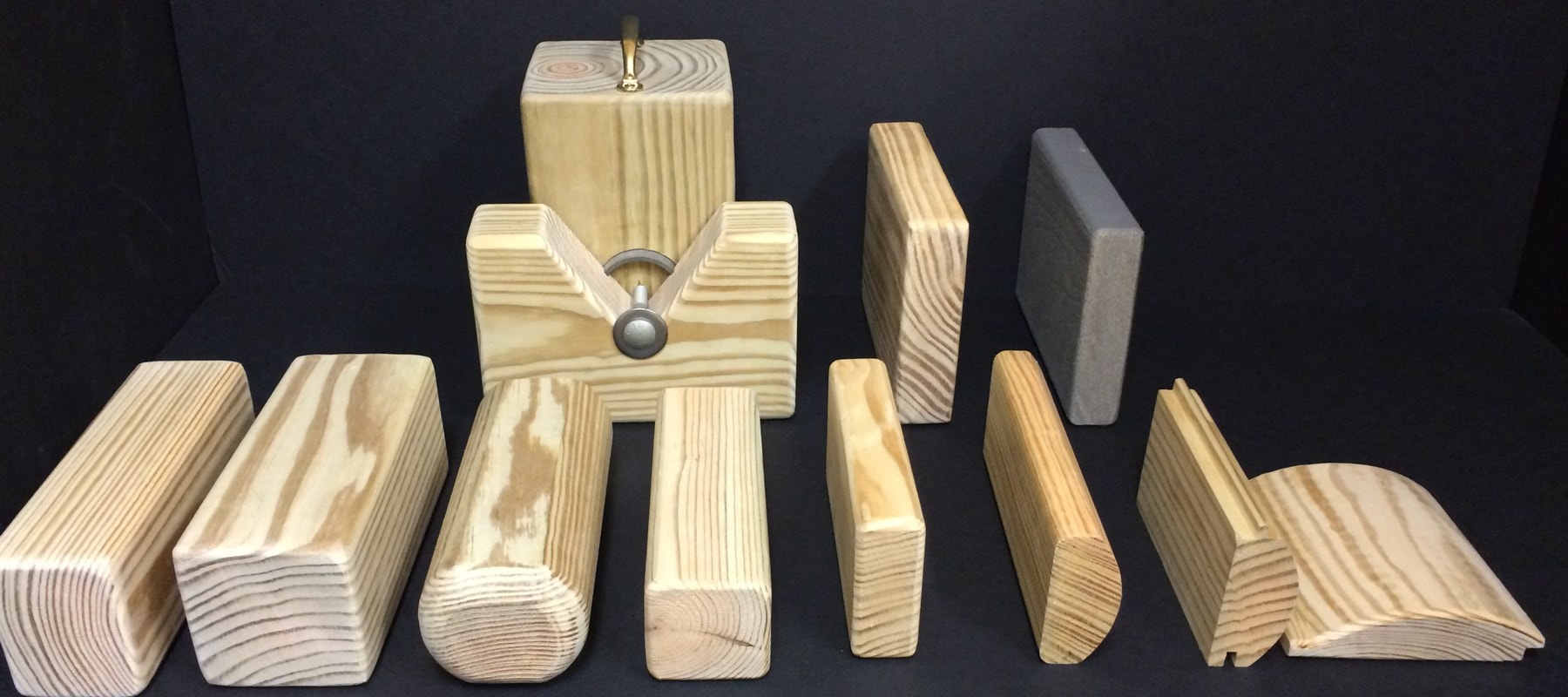
Structural performance begins with the material itself. Our timbers are carefully inspected for grade, strength, straightness, density, and overall quality before fabrication. Selecting consistent material helps every post, beam, platform, and connection perform as intended while supporting accurate joinery and a refined finished structure.
Kiln-Dried for Greater Stability
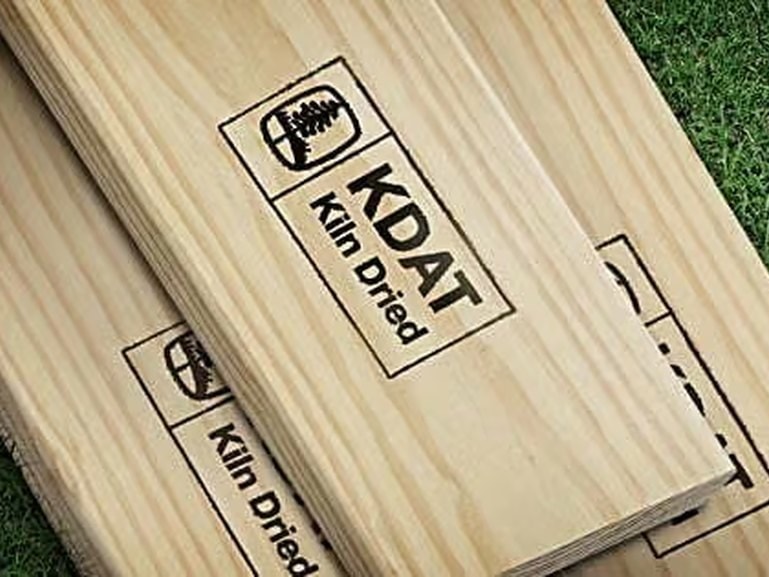
Our lumber is kiln-dried before treatment and kiln-dried again afterward — a controlled process known as KDAT, or Kiln Dried After Treatment. Because waterborne pressure treatment can substantially increase the wood's moisture content, this second kiln cycle removes added moisture before components are machined and assembled. Allowing treatment-related shrinkage to occur under controlled temperature and airflow improves dimensional consistency, machining accuracy, joint alignment, and finishing performance. It also reduces the potential for excessive cupping, twisting, checking, and warping after installation.
Engineered Load Design
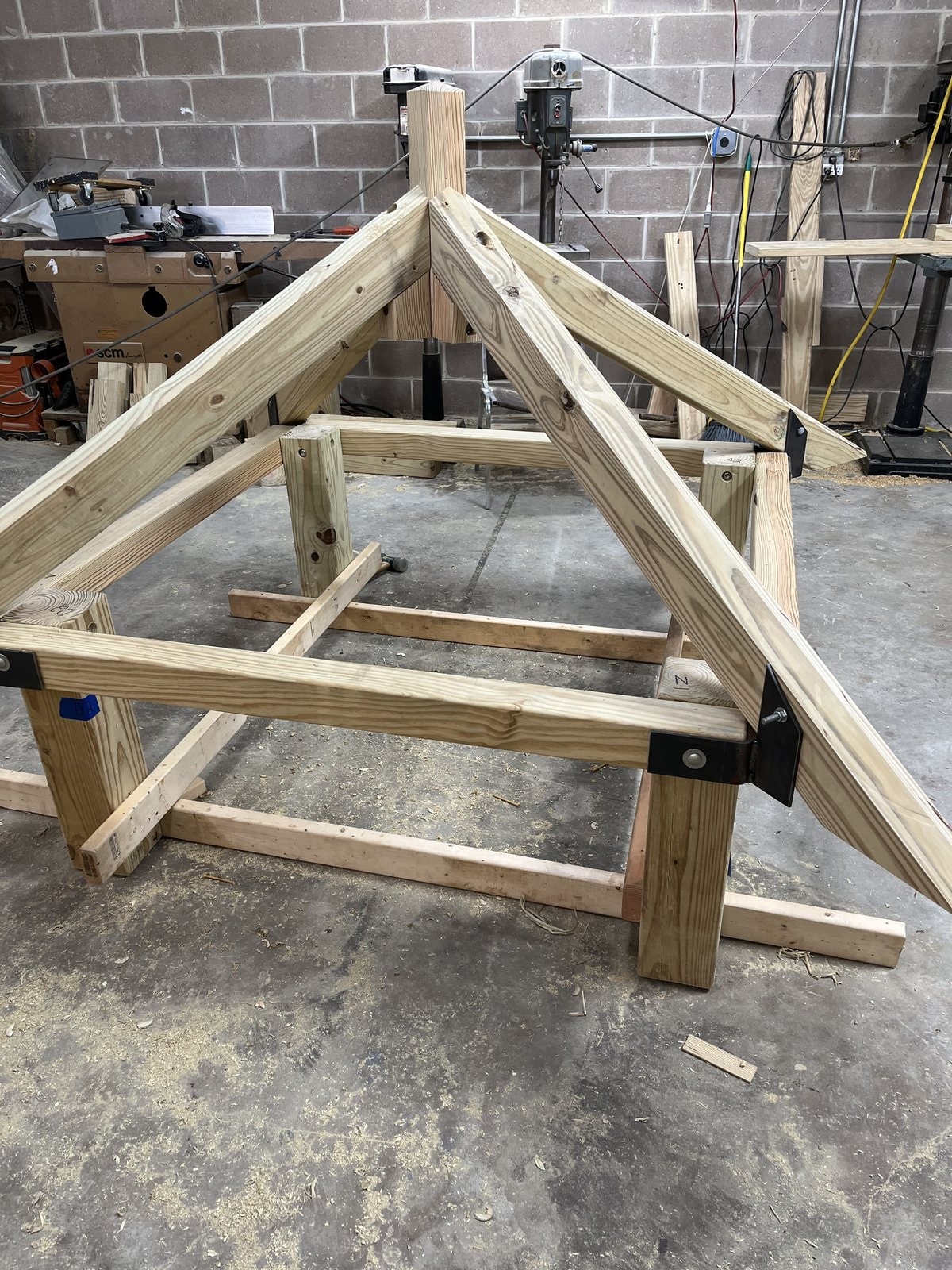
Every PlaywoodPlus structure is designed around calculated load paths. Platforms, beams, posts, and connections are sized to accommodate the live and dynamic forces created by active children — not simply static weight. By considering how these forces travel through the structure and into its supports, we create play systems that remain solid and stable during energetic, real-world use. Connections, brackets, and supporting members work together as a complete structural system rather than as isolated components.
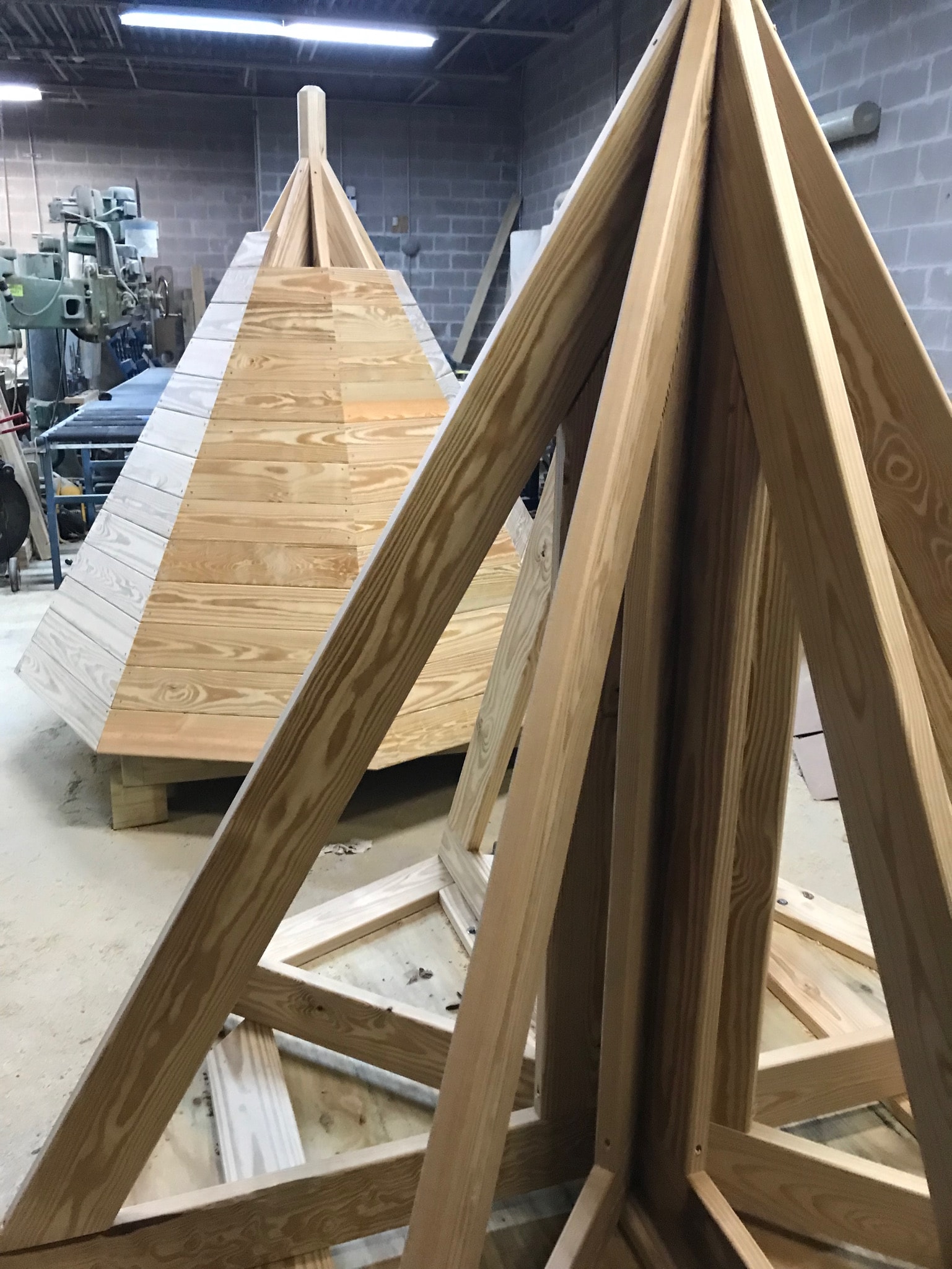
Precision Joinery
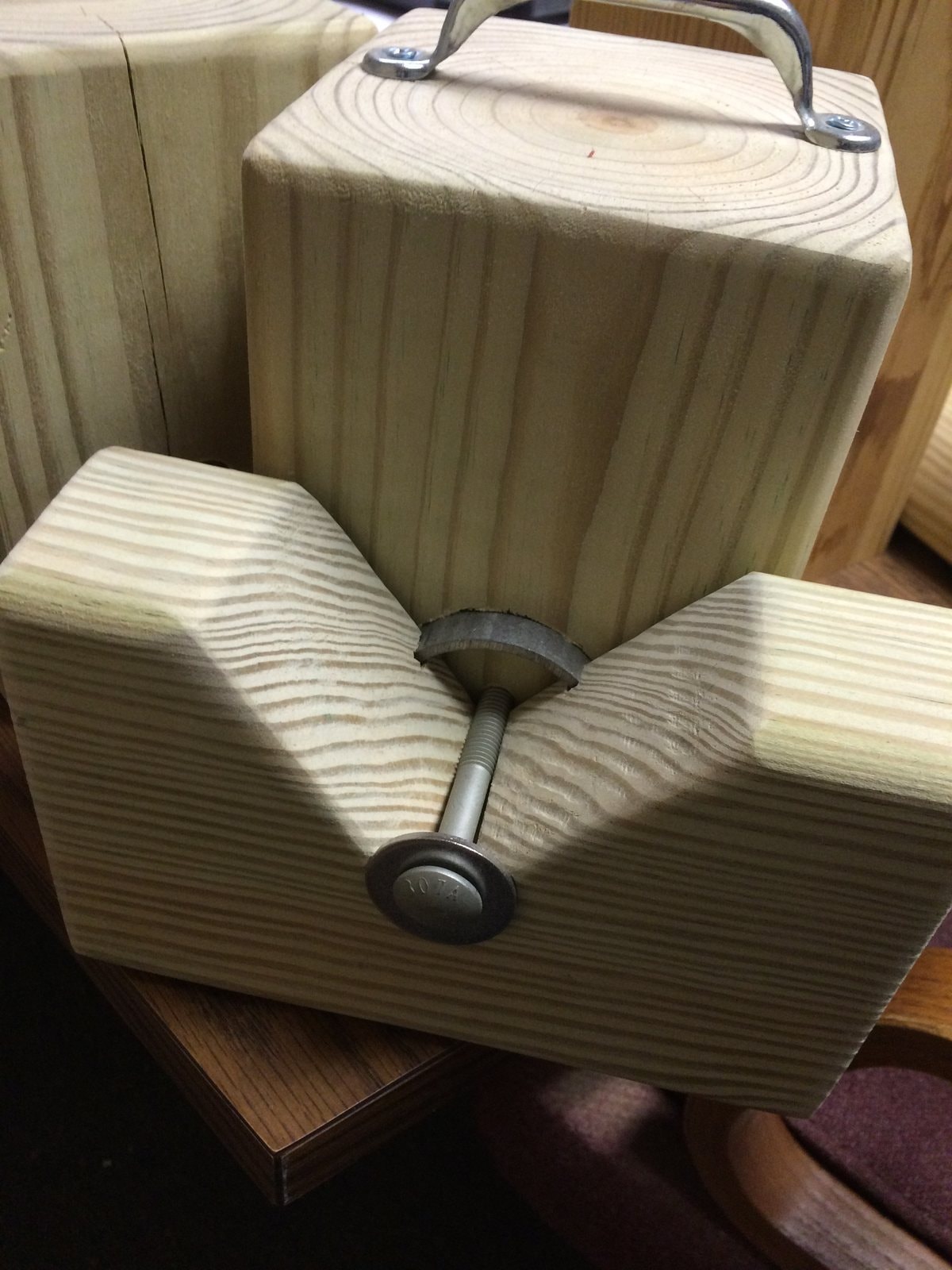
Precision-cut joinery allows adjoining timbers to fit together accurately and share loads across each connection. Combined with heavy-duty hardware, these closely fitted joints help resist racking, movement, wobbling, and the gradual loosening that can occur when a structure relies primarily on surface-driven nails or screws. At critical load-bearing connections, we use through-bolts paired with stainless-steel load rings. Through-bolts clamp the full thickness of adjoining timbers together, while the load rings distribute connection forces over a broader area of wood — helping limit localized compression, fastener pull-through, and wear while creating durable connections that remain accessible for inspection and maintenance.
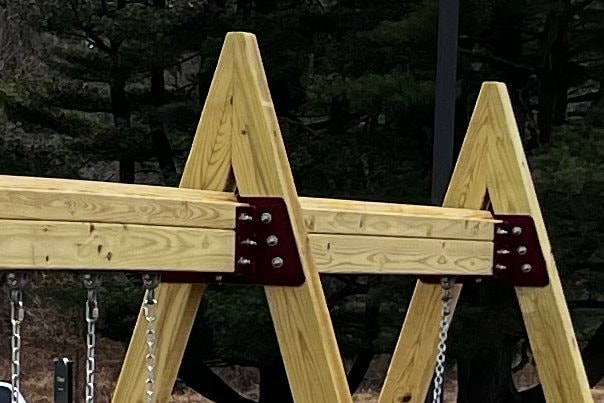
Purpose-Built Structural Brackets
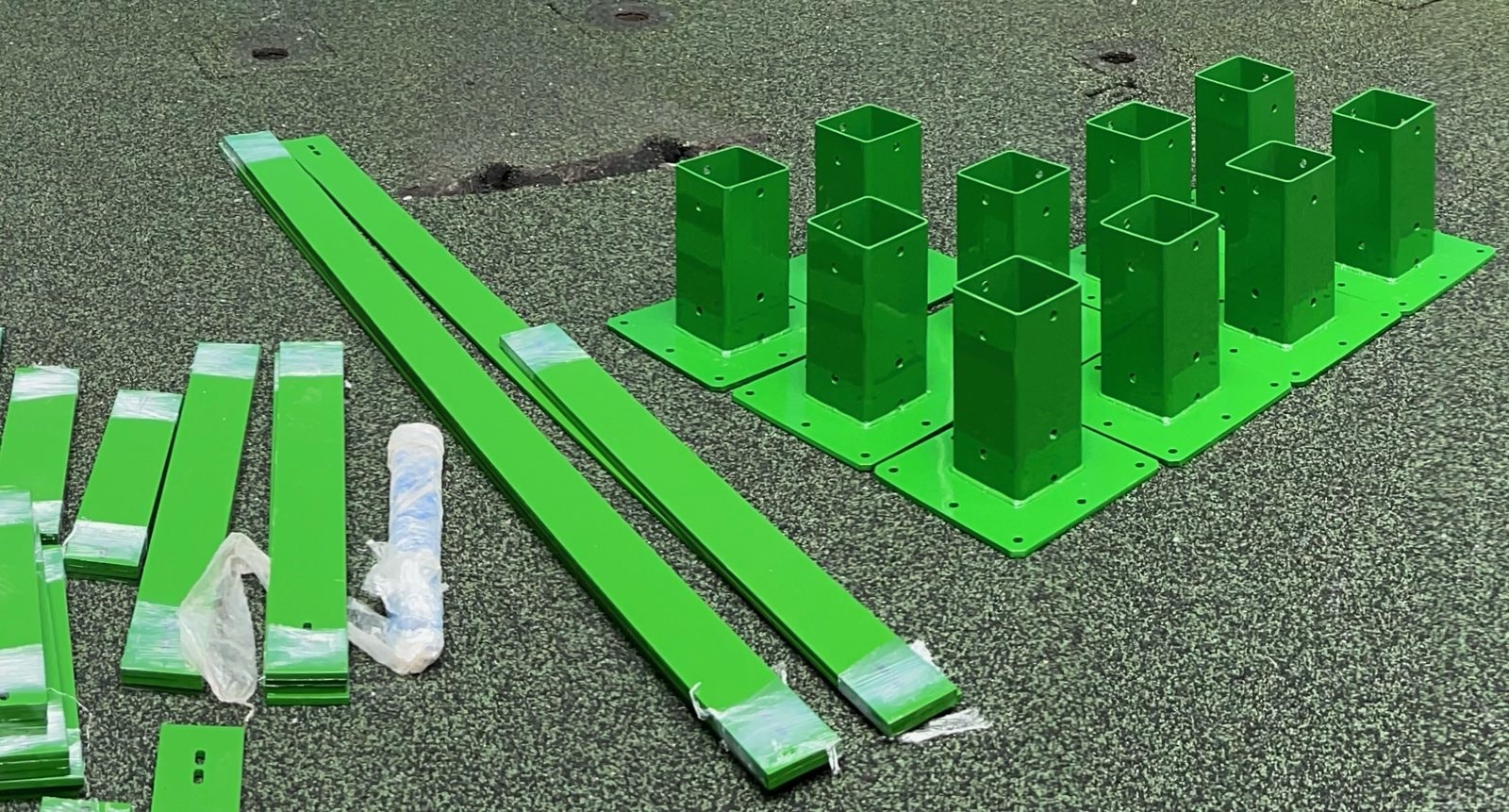
When a standard connector does not adequately address a particular load path, we fabricate custom brackets for the application. These purpose-built components are especially valuable in roof assemblies, complex timber intersections, and surface-mounted installations where forces must be transferred between members or into the supporting structure. Each bracket is configured around the connection geometry, loading arrangement, fastener pattern, material compatibility, and environmental exposure — allowing reinforcement to be placed precisely where it is needed without adding unnecessary bulk elsewhere.
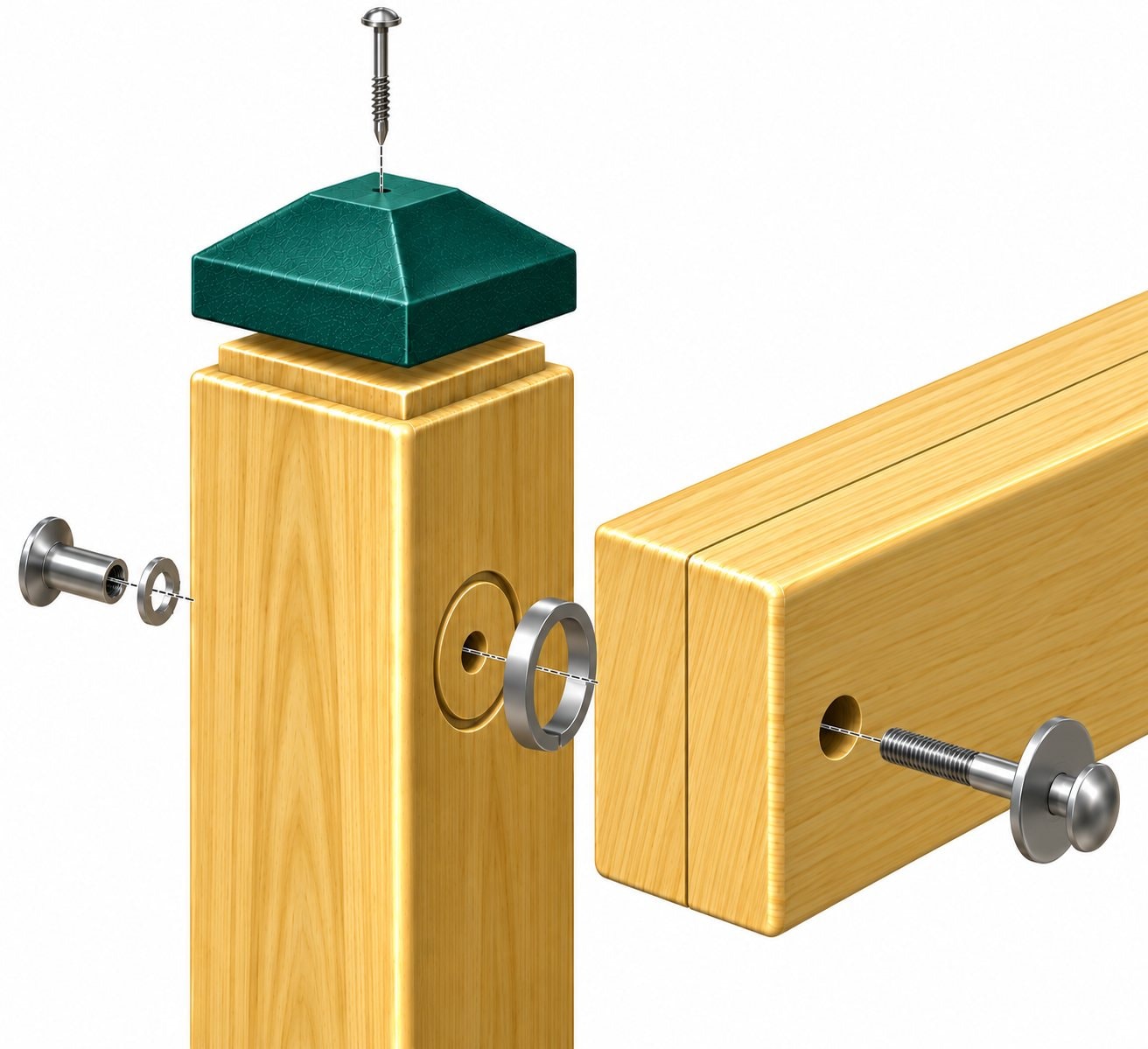
Hardware Selected for the Application
Every connection depends on hardware matched to its structural role and environment. We use hot-dip galvanized (ASTM A153), ceramic- and epoxy-coated, and stainless-steel fasteners and connectors — each chosen for its specific exposure. Stainless steel is emphasized at critical load-bearing points, frequently handled areas, and locations subject to repeated wetting. Type 304 suits most demanding outdoor uses; Type 316 is specified for poolside, coastal, and salt-exposed environments. Coated products are used only when rated for direct contact with MCA-treated lumber. Tamper-resistant heads are standard at accessible connections, and every detail is designed to shed water rather than trap it. Compatible metals are paired within each assembly to reduce galvanic-corrosion risk.
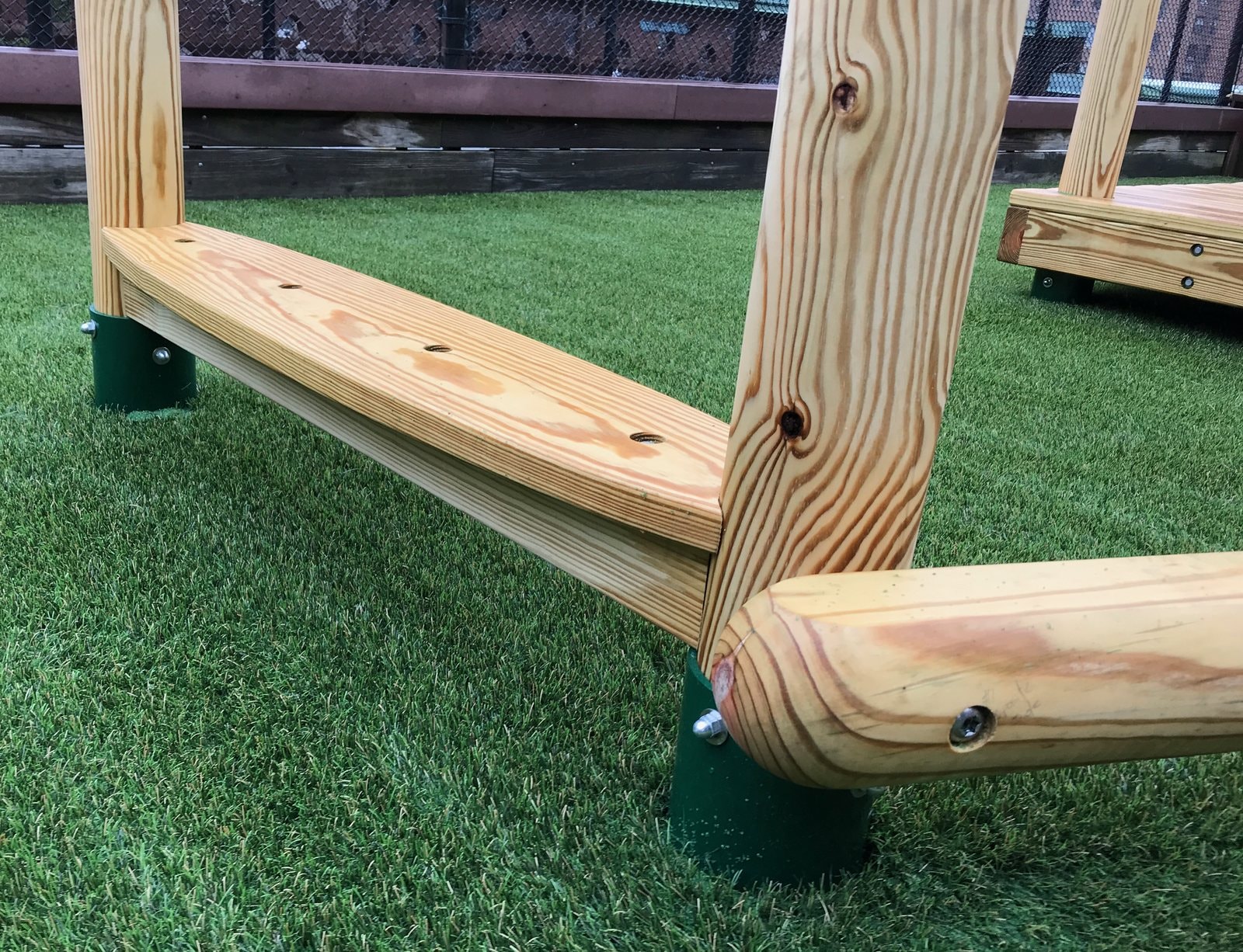
Material Protection Where It Matters
Durability begins with matching each material to its exposure. Selected posts and timbers used at or near grade receive the higher preservative-retention level specified for ground contact, while horizontal surfaces can be upgraded with long-life composite decking where prolonged moisture and wear are greatest. Combined with kiln drying after treatment, proper drainage, compatible hardware, and careful detailing, these choices help the complete structure remain stable, serviceable, and attractive through years of outdoor use.
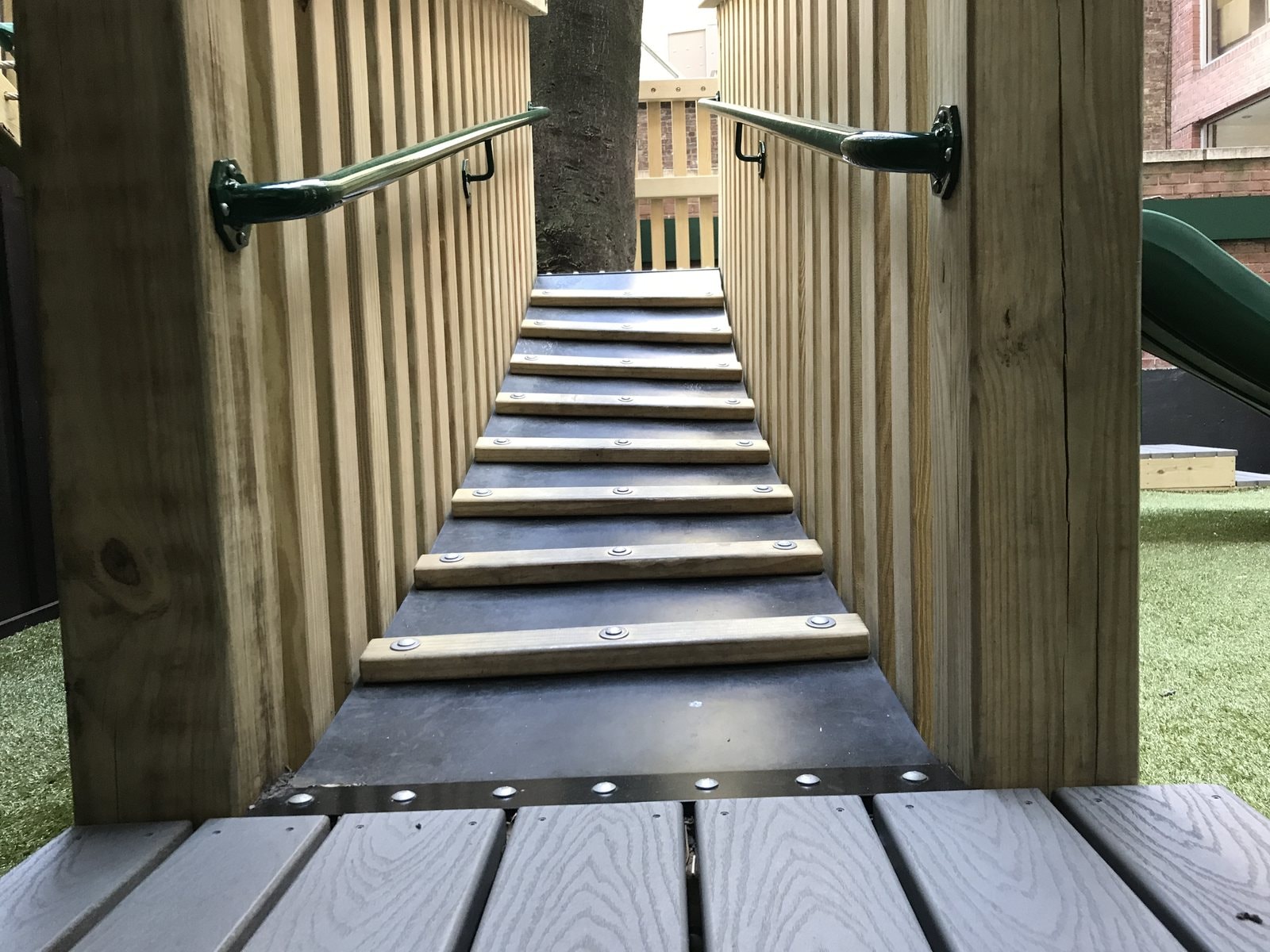
Strategic Composite Surfaces
Horizontal boards experience some of the structure's longest and most demanding exposure to rain, standing moisture, sunlight, and foot traffic. To extend service life in these locations, PlaywoodPlus can substitute long-life composite decking — such as nominal two-inch Trex® boards — for selected walking and platform surfaces. Composite decking does not rot or require preservative treatment and provides a consistently smooth, splinter-resistant surface. These boards are installed over a properly designed timber or metal support system, with product selection, support spacing, drainage, expansion clearance, and fastening configured for the specific material and application.
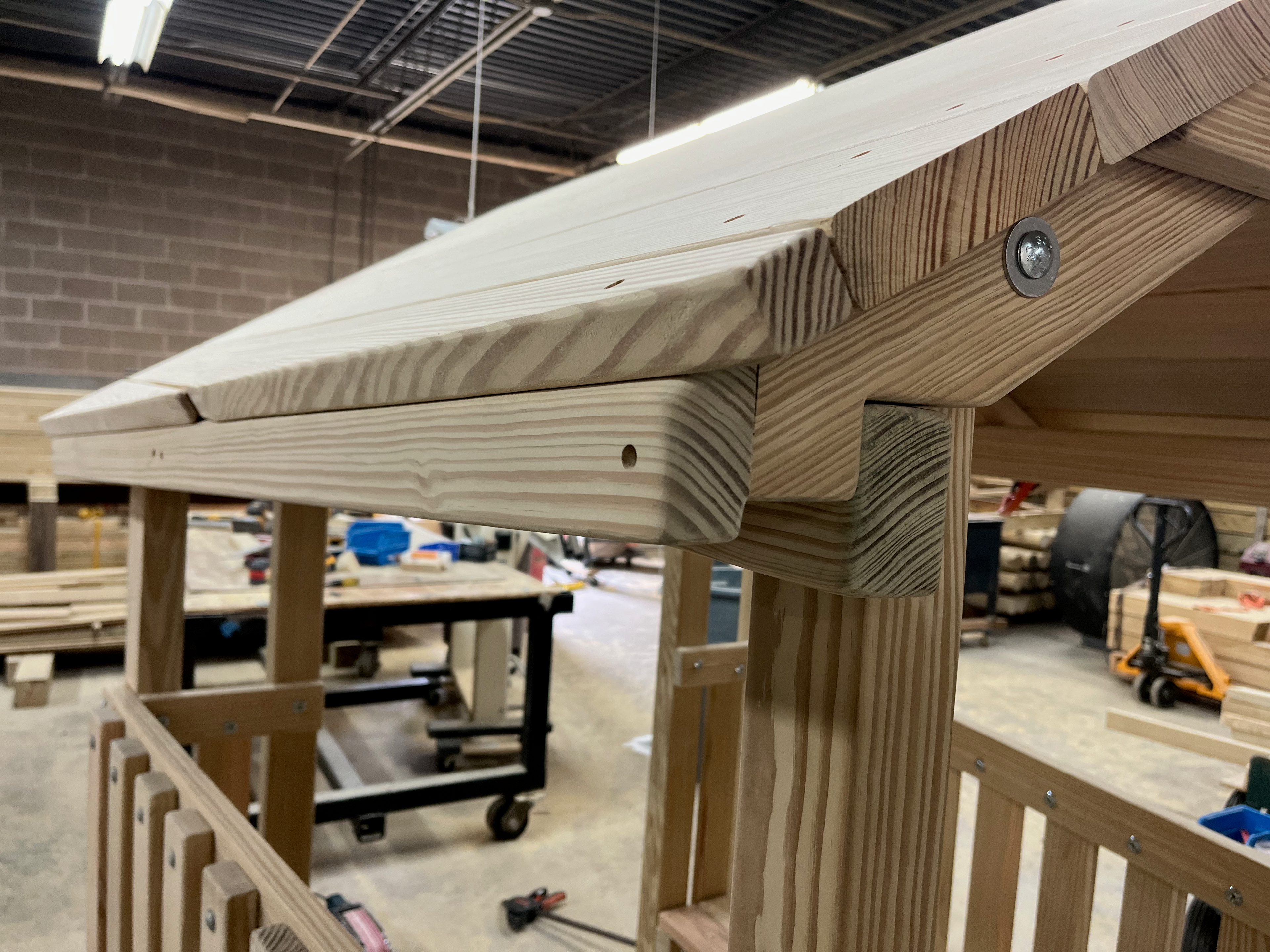
Smooth, Carefully Finished Surfaces
Every accessible timber surface is precisely machined and carefully sanded to minimize splinters, sharp edges, and rough contact points. Attention to lumber quality, moisture content, joinery, and finishing helps the wood weather more evenly while reducing unnecessary surface deterioration. As the structure is enjoyed, frequently touched areas naturally develop a subtle patina — contact gradually burnishes the wood fibers, giving handrails and other high-use surfaces a smoother, comfortably worn character that adds warmth and authenticity over time.
Designed as a Complete System
Long-term performance does not come from any single material or feature. It comes from coordinating timber selection, moisture control, structural design, precision fabrication, hardware, drainage, and finishing. PlaywoodPlus considers each element as part of one integrated system — creating outdoor play structures designed to remain strong, functional, attractive, and maintainable through years of active use.
Timber and Treatment
Southern Yellow Pine
Southern Yellow Pine is one of North America's strongest and densest structural softwoods, offering excellent strength, stiffness, and fastener-holding performance. Its pronounced grain gives each structure a warm, natural character, while its permeable sapwood accepts pressure treatment deeply and consistently. This combination of structural capacity, machinability, treatment performance, and regional availability makes Southern Yellow Pine particularly well suited to posts, beams, platforms, railings, and other demanding outdoor components. The result is a durable, renewable material capable of supporting years of active play.
From CCA to MCA: Understanding the Transition
CCA — chromated copper arsenate — is a pressure-applied preservative containing copper, chromium, and arsenic that was widely used to protect outdoor wood from fungal decay and termite damage. In 2002, manufacturers voluntarily requested the discontinuation of most residential uses as the industry and EPA worked to reduce potential arsenic exposure, particularly in settings where children frequently contact treated wood. That transition took effect at the end of 2003, and newer copper-based preservatives became the standard for residential decks, playgrounds, and similar applications.
Kiln Dried Before Treatment
MicroPro® MCA Treatment
PlaywoodPlus uses Southern Yellow Pine pressure-treated with MicroPro® MCA, an AWPA-standardized micronized copper azole preservative that protects against fungal decay and termite damage. Treatment is matched to each component's exposure, with higher preservative-retention levels used for selected members at or near ground contact. MicroPro provides a lighter, more natural appearance and improved corrosion performance with approved hardware while meeting applicable building-code requirements under ICC-ES ESR-2240.
KDAT — Kiln Dried After Treatment
Our lumber is kiln-dried before treatment and kiln-dried again afterward. Because waterborne pressure treatment can raise moisture content above 50%, KDAT removes much of that added moisture under controlled temperature and airflow before machining and assembly. Allowing treatment-related shrinkage to occur in the kiln improves dimensional consistency, machining accuracy, joint alignment, and fastener performance while reducing the tendency to cup, twist, check, or warp after installation. The result is a more stable structure with a cleaner, longer-lasting finish.
Safe for Children
MicroPro-treated wood is approved for use in residential and commercial playground equipment. It carries UL GREENGUARD Gold Certification — meeting stringent standards for low VOC emissions — making it suitable for schools and other sensitive environments.
Better Corrosion Protection
MicroPro has corrosion rates on metal products similar to untreated wood — a significant improvement over older treatments. It is approved for aluminum contact and compatible with code-approved fasteners and hardware.
Certified Sustainable
MicroPro holds SCS Certified™ Environmentally Preferable Product status, Home Innovation NGBS Green Certified™ approval, UL GREENGUARD Gold Certification, and Global GreenTag Level A — the highest score under GreenTag's GreenRate™ sustainability system.
Explore more PlaywoodPlus features:
See the Quality for Yourself
Browse our product gallery or request a free idea catalog to explore the full range of PlaywoodPlus structures.